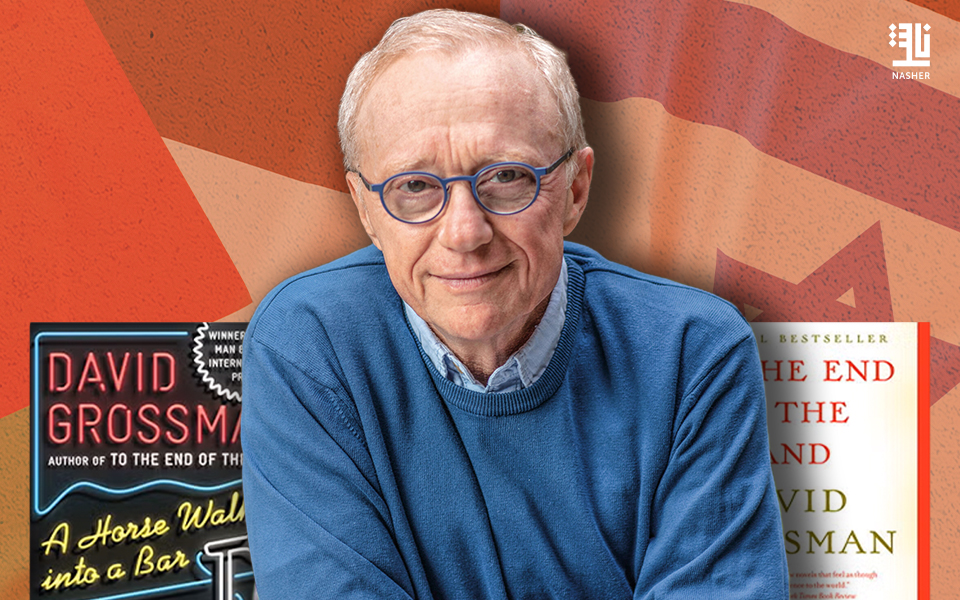
The award-winning Israeli author David Grossman has described his country’s campaign in Gaza as a genocide and said he now “can’t help” but use the term.
“I ask myself: how did we get here?” the celebrated writer and peace activist told the Italian daily La Repubblica in an interview published on Friday.
“How did we come to be accused of genocide? Just uttering that word – ‘genocide’ – in reference to Israel, to the Jewish people, that alone, the fact that this association can even be made, should be enough to tell us that something very wrong is happening to us.”
Grossman said that for many years he had refused to use the term. “But now I can’t help myself – not after what I’ve read in the papers, not after the images I’ve seen, not after speaking with people who’ve been there. This word is an avalanche: once you say it, it just gets bigger, like an avalanche. And it adds even more destruction and suffering,” he said.
The author, who has long been a critic of the Israeli government, told La Repubblica he was using the word “with immense pain and with a broken heart”.
“Reading in a newspaper or hearing in conversations with friends in Europe the association of the words ‘Israel’ and ‘hunger’ – especially when this comes from our own history, from our supposed sensitivity to human suffering, from the moral responsibility we’ve always claimed to hold toward every human being, not just toward Jews – this is devastating,” said Grossman, who won the country’s top literary prize, the Israel prize, in 2018 for his work spanning more than three decades.
“The occupation has corrupted us,” he said. “I am absolutely convinced that Israel’s curse began with the occupation of the Palestinian territories in 1967. Maybe people are tired of hearing about it, but that’s the truth. We’ve become militarily powerful, and we’ve fallen into the temptation born of our absolute power, and the idea that we can do anything.”
Grossman’s works, which have been translated into dozens of languages, have won many international prizes.
He also won Israel’s top literary prize in 2018, the Israel Prize for Literature, for his work spanning more than three decades.