Home 5 News 5 Bertelsmann May Raise Stake in Penguin Random House to 75 Percent

Bertelsmann May Raise Stake in Penguin Random House to 75 Percent

by | Feb 13, 2017 | News

When Pearson and German media group, Bertelsmann, merged Penguin Books and Random House in a £2.4bn deal in July 2013, they created the world’s biggest book publisher by revenues, accounting for one in every four books sold globally. Now, just three-and-a-half years later, Pearson has almost decided to offload its 47 per cent stake in the joint venture – a move that will in all probability increase Bertelsmann’s stakes in the company from 53 percent to between 70 and 75 percent, if Pearson exercised its option to sell.

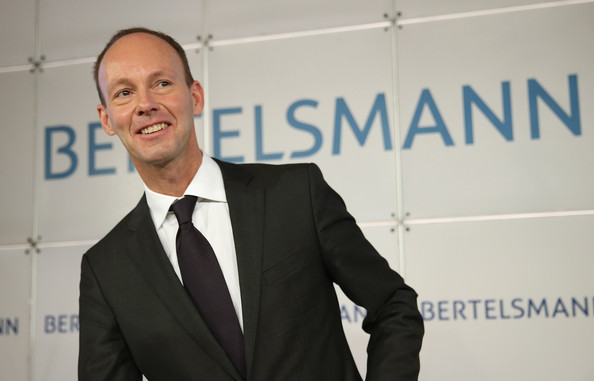
Presenting Bertelsmann’s rationale behind the move, their Chief Executive, Thomas Rabe said, “The publishing industry is and will remain one of our strategic core businesses, and will further strengthen our presence in the US, which is our second largest market.”

The German company bids on the strength of printed print publications in international markets, especially in the US and India. Their publishing section profits in 2015 clocked at €557 million – a 50 percent increase compared to 2014. They predict the market will remain strong in the coming months.

The company was founded in 1835, and employs 117,000 in television, magazine, education, publishing and other sectors in 63 countries around the world today. Random House was set up in the US in 1925, and acquired by Bertelsmann in 1998.
Recent News

20Dec
When Dia Mirza Writes for Children

When Dia Mirza Writes for Children

Indian actor Dia Mirza is embarking on a new creative journey as she develops a five-book children’s series inspired by her personal experiences, values, and long-standing love for storytelling. The project marks a significant shift in her artistic path, allowing her to channel her worldview into stories crafted to spark curiosity, nurture imagination, and offer […]

18Dec
Born With a Library Card

Born With a Library Card

UK think tank the Cultural Policy Unit (CPU) has proposed giving all UK newborns a lifelong library card to boost literacy rates among children and into adulthood.   Its proposal means that membership would be linked directly to registrations of birth, meaning library cards would be waiting for newborns at their local library. Currently, parents have […]

18Dec
Epistolary Literature Reclaim its Literary Power

Epistolary Literature Reclaim its Literary Power

In an age where words rush past like lightning and messages are reduced to quick taps on glowing screens, epistolary literature returns to remind us that writing was once a slow, deep, emotion-laden act. This form of literature offers more than a topic, it reveals its writer as they truly are: fragile, sincere, or brimming […]

Related Posts

Born With a Library Card

Born With a Library Card

UK think tank the Cultural Policy Unit (CPU) has proposed giving all UK newborns a lifelong library card to boost literacy rates among children and into adulthood.   Its proposal means that membership would be linked directly to registrations of birth, meaning library...

Epistolary Literature Reclaim its Literary Power

Epistolary Literature Reclaim its Literary Power

In an age where words rush past like lightning and messages are reduced to quick taps on glowing screens, epistolary literature returns to remind us that writing was once a slow, deep, emotion-laden act. This form of literature offers more than a topic, it reveals its...

Waterstones Sets Limits on AI Content

Waterstones Sets Limits on AI Content

Waterstones’ CEO James Daunt has said it will do everything it can to keep AI generated content out of its stores.  He told the BBC’s Big Boss podcast: “We use it in a limited way. It helps our customer service operation become more efficient. It helps us in logistics...

Previous Next
Close
Test Caption
Test Description goes like this