Home 5 Articles and Reports 5 Beijing Moves to Protect its Bookshops

Beijing Moves to Protect its Bookshops

by | Jul 26, 2018 | Articles and Reports

Nasher


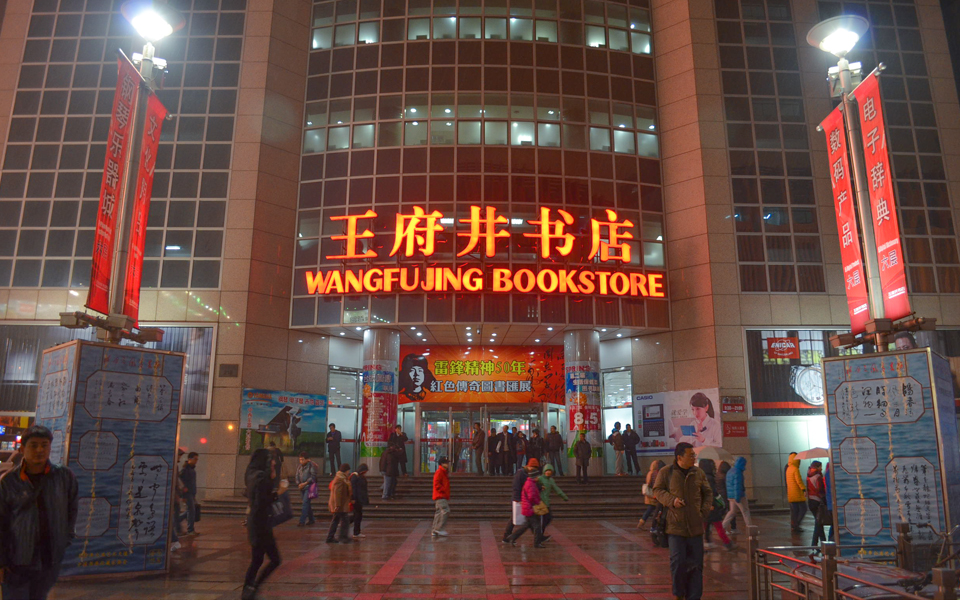
China is acting to protect Beijing’s physical bookshops.  The authorities are providing subsidies worth almost £5.7m to help pay for at least 40% of rents and improvements to bookshops.  The plan is to encourage more than 700 bookshops to open across the greater Beijing region, bringing the total number to more than 1700.


Zhang Su, deputy director of the Beijing bureau of press, publication, radio, film and television, said: “Brick-and-mortar bookstores are an important part of a city’s cultural infrastructure. They carry the memories of a city, they embody a city’s cultural heritage and they affect a city’s cultural ambience.”


The authorities have decided that bookshops are integral to the city’s future.  “We cannot rely on the market to ease the bricks-and- mortar bookshops’ existential difficulties, and a government policy supporting them is absolutely necessary,” Zhang said.

The city authorities want each of Beijing’s 16 districts to have a “highly visible” bookshop, in shopping centres, sightseeing spots, transportation hubs and densely populated neighbourhoods. They can open 24 hours a day and public libraries will also set up branches inside bookshops and vice-versa, bookshops can open in libraries.

The requirement that a bookshop must have been in business for three years in order to receive subsidies has been scrapped, which means that more are eligible to benefit.  The city has also extended a clause to exempt all bookstores from sales taxes.

The question of how much the state should intervene in the protection of bookshops is one the book industry wrestles with from country to country.  In France and Germany, for example, discounting of books is illegal in order to create a level playing field for smaller outlets.  The UK used to have such a system – called the Net Book Agreement – but it collapsed in 1995.  The next two decades saw a decline in the number of independent bookstores as a result, though that slow-down has now halted.

China’s move to help the capitals’ bookshops will be watched with interest by the international book community.

Recent News

03Sep
The Delivery Rider Who Became a Prizewinner

The Delivery Rider Who Became a Prizewinner

A Chinese food delivery rider who turned the frustrations of gig work into poetry has won one of the country’s highest literary honours. Wang Jibing, 56, received the prestigious Lu Xun Literary Prize for Low Flight, a collection inspired by conversations with over 200 delivery riders and the everyday pressures of China’s vast gig economy. […]

02Sep
Why is Global Publishing Turning to Sharjah?

Why is Global Publishing Turning to Sharjah?

Sharjah’s rise to the forefront of the global cultural landscape was neither a matter of chance nor the result of isolated achievements. It is the outcome of a far-reaching cultural vision founded on the belief that culture is not merely a complement to development, but one of its fundamental pillars. For decades, His Highness Sheikh […]

02Sep
Lisbon Asks What Reading’s Future Holds

Lisbon Asks What Reading’s Future Holds

Lisbon will become a meeting point for some of the most influential voices in publishing, culture and public life on September 15 and 16, 2026, as the fourth edition of BOOK 2.0 – The Future of Reading takes place at the Belém Cultural Centre. Under the theme “Back to Basics, Back to Books,” the conference […]

Related Posts

What’s Really Behind the “Bestseller” Label?

What’s Really Behind the “Bestseller” Label?

Sometimes, all it takes is the word “bestseller” on a book cover for its success to appear settled beyond question. The label compresses the choices of thousands of readers into a single claim and pushes the book to the forefront. Yet behind it lies a far more...

Did Borges Enter the Digital Labyrinth Before Us?

Did Borges Enter the Digital Labyrinth Before Us?

On 24 August 1899, a writer was born in Buenos Aires, the Argentine capital, who would spend his life among books, labyrinths, mirrors and questions without end. Jorge Luis Borges never knew the internet, never saw a smartphone screen or a search engine. Yet decades...

Mary Shelley Asked the AI Question First

Mary Shelley Asked the AI Question First

Mary Shelley was born in London on 30 August 1797, and would go on to give literature one of its most famous creations: Frankenstein. She was only eighteen when she began writing the novel, unaware that she was placing at its heart a question that would remain alive...

Previous Next
Close
Test Caption
Test Description goes like this