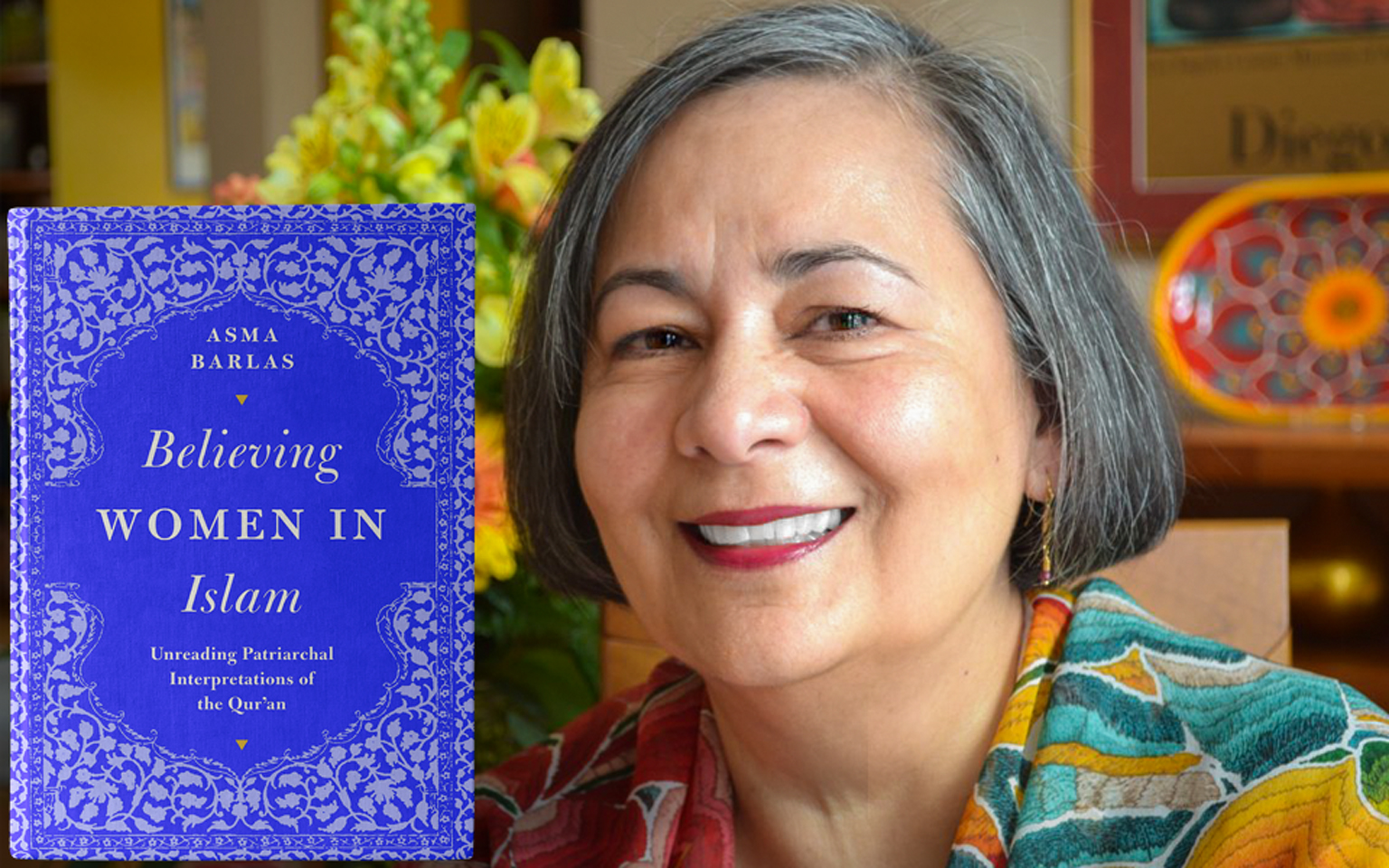
The author the fundamental work Believing Women in Islam, Asma Barlas, will be having her first tour in the UK, for the first time, this July.
She has made great achievements, some of them being; A proficient academic author as well as a Pakistan-American writer, in 1976: She was among the first ladies to be enlisted in foreign service in Pakistan: Became the first Muslim to be the Spinoza Chair in Amsterdam: In 2008, at Ithaca College in New York: She was the founder of the department of The Study of Race, Culture, and Ethnicity. Still at Ithaca college, she a profound professor of politics.
In Trusting Ladies in Islam, Asma Barlas offers a populist perusing of the Qur’an. She contends that a long way from supporting male benefit, Islam’s most hallowed sacred writing really insists the total uniformity of the genders, and shows how, for a considerable length of time, Muslims have perused man-controlled society into the Qur’an to legitimize existing religious and social structures.
Believing Women in Islam
Unreading Patriarchal Interpretations of the Qur’an
Asma Barlas
About the Book
Does Islam take into consideration the mistreatment of ladies?
The enslavement of ladies in numerous Muslim nations is frequently utilized as proof of this, while a bountiful number of Muslims read the Qur’an in manners that appear to legitimize sexual mistreatment and disparity. In this outlook changing book, Asma Barlas contends that a long way from supporting male benefit, the Qur’an really certifies the total uniformity of the genders.
Offering a chronicled investigation of religious expert and learning, Barlas demonstrates how, for a considerable length of time, Muslims have perused man controlled society into the Qur’an to legitimize existing religious and social structures. In this original volume, she brings perusers into the core of Islamic lessons on ladies, sexual orientation and male controlled society, offering a libertarian perusing of Islam’s most holy sacred writing.
This modified version incorporates two new sections, another prelude, and updates all through.
More about the author
Asma Barlas is a Pakistani-American essayist and scholastic. She is as of now an educator of governmental issues at Ithaca School. She earned a BA in English Writing and Philosophy from The Kinnaird College, and from the University of Punjab, she earned an MA in Journalism. And in the University of Denver, she graduated with an MA as well as PhD in International Studies. Barlas was beforehand the establishing chief of the Department of Study of Race, Culture, and Ethnicity at Ithaca School for a long time, and held the Spinoza Chairlady position in Philosophy; the University of Amsterdam. Other of her books are; Essays on Religion and Politics: Re-understanding Islam, and A Double Critique and Islam.