Different Generations, Experiences and Interpretations
Jafar Al Okaili
Two debut novels are among an intriguing range of subjects and styles that have been announced as the shortlisted nominees for the 11th edition of the International Prize for Arabic Fiction 2018 (IPAF), also known as the Arabic Booker.
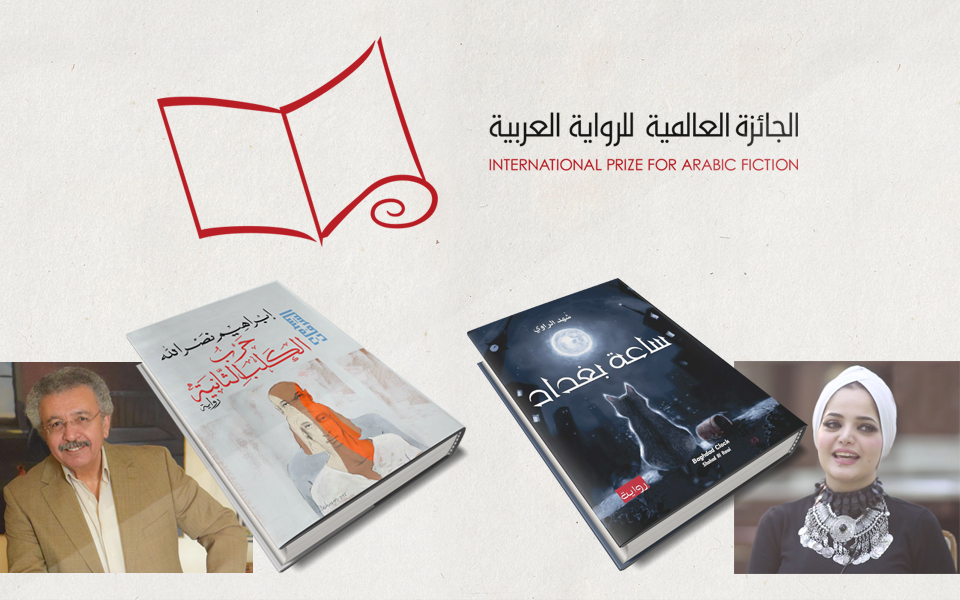
Dr. Ibrahim Al Saafin, Chairperson of the Judging Panel, announced that the debuts ‘Baghdad Clock’, published by Dar al-Hikma and written by Iraqi novelist Shahad Al Rawi (born 1986), and ‘The Critical Case of K’, published by Dar Tanweer – Beirut and written by Saudi novelist Aziz Mohammed (born 1987) had earned a place on the final selection – the authors are also the youngest of all IPAF 2018 shortlisted and longlisted authors.
Addressing the memory and identity of place, ‘Baghdad Clock’ has been translated into English and is anticipated to be published next June by Oneworld Publications. It is a simple, yet profound account of human destiny in the context of Baghdad and time. ‘The Critical Case of K’ describes a cancer patient’s struggle and his perception of existence in an innovative and detailed narrative.
Two of the other shortlisted authors for this year’s edition have been contenders for the prize in previous years, namely Sudanese author Amir Tag Elsir whose ‘The Hunter of the Chrysalises’ was shortlisted in 2011, and Palestinian novelist Ibrahim Nasrallah whose ‘Time of White Horses’ was shortlisted in 2009.
This year, the two novelists are down to the last six with their works ‘The Second War of the Dog’ by Nasrallah, published by the Arab Scientific Publishers, which takes on fantasy, science fiction and magic to depict human psyche, personality and community transformation, and Elsir’s ‘Flowers in Flames’, published by Dar Al Saqi, which highlights human rituals and how ignorance and unilateralism threaten to control social and economic reconstruction. The two novelists also supervised the Al Nadwa creative workshop that IPAF organises each year for talented young writers.
Palestinian novelist Walid Al Shurafa and Syrian author Dima Wannous complete the shortlist for 11th edition. Al Shurafa’s ‘Heir of the Tombstones’, published by Al Ahlia, plunges the depths of human suffering under occupation and the destruction of identity, while Wannous’ ‘The Frightened Ones’, published by Dar al-Adab, depicts the contrast between governments and citizens, and exposes the abnormal relationship between them, with a focus on the fear that runs the life of individuals and communities.
The judging panel is chaired by Jordanian academic and critic Ibrahim Al Saafin, who is supported by fellow panel members Algerian academic and poet novelist Inaam Bayoud, Slovenian author and translator Barbara Skubic, Palestinian novelist Mahmoud Shukair and British-Sudanese novelist Jamal Mahjoub.
The shortlisted titles, which were selected from 124 novels across 10 countries and published between July 2016 and June 2017, were announced at a press conference hosted by the Abdul Hameed Shoman Foundation.
Longlisted titles included: ‘Pilgrim Christina’, written by Atef Abu Saif; ‘The Last Country’, by Antoine Douaihy; ‘Al-Najdi’, written by Taleb Al Refai; ‘Leg Over Leg – in the Sighting of the Lovers’ Crescent’, by Amin Al Zaoui; ‘The Earthen Fortress’ written by Ahmed Abdel Latif; ‘Passion’, written by Rasha Adly; ‘Huddud’s House’, by Fadi Azzam; ‘Here is the Rose’, written by Amjad Nasser; ‘The Black Peacock’, written by Hamed Al Nazir; and ‘Ali, the Story of an Honourable Man’, from Hussein Yassin.
Ibrahim Al Saafin noted that the six shortlisted novels addressed social, political and existential topics, using modern and post-modern narrative techniques with confidence and certainty.
For his part, Yasir Suleiman, Chairman of the Board of Trustees of IPAF, explained that the shortlisted novels engage with Arab realities, implications and fragments of nightmare scenarios, covering human suffering and pain.
“This depth of understanding is crucial if we really want to engage with reality on one hand and exceed it with the other, in a composite process of accountability and responsibility, as well as progress and retrogression,” he said.
The winning novel of IPAF 2018 will be announced at a ceremony in Hotel Fairmont Bab Al Bahr – Abu Dhabi, on Tuesday 24 April 2018, the eve of the opening of the Abu Dhabi International Book Fair (ADIBF). All shortlisted authors will receive USD 10,000 and the winner will receive additional USD 50,000.