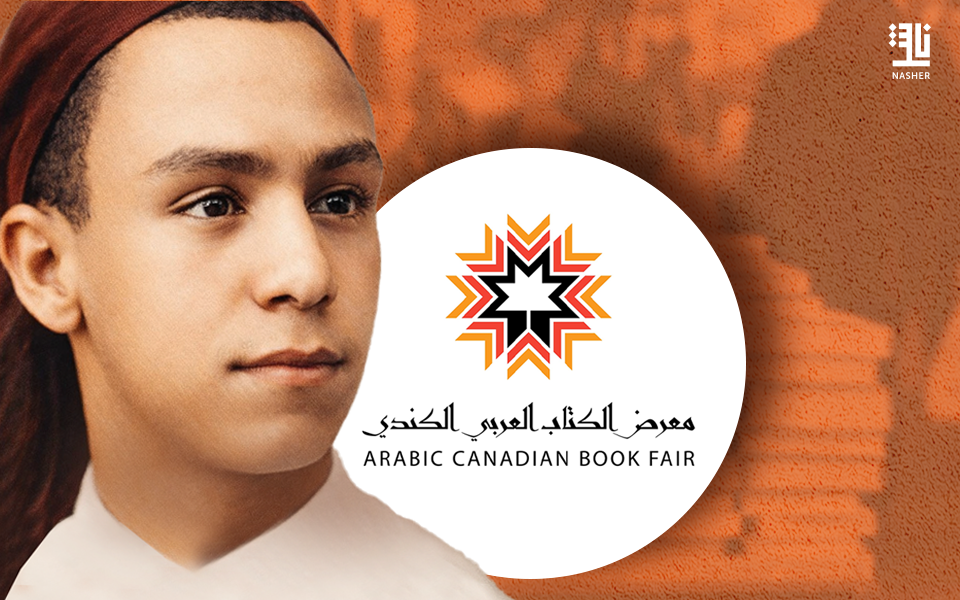
The Canadian city of Mississauga is set to host the fourth edition of the Arab Canadian Book Fair, an event that moves beyond the scope of a conventional cultural gathering to become a living space for intercultural dialogue, and a mirror reflecting the presence of Arabic literature in the diaspora. Scheduled for April 25 and 26, and held in conjunction with Arab Heritage Month in Canada, the fair carries a symbolic resonance that reinforces its role as a bridge between memory and belonging, between language as identity, and writing as a human act that transcends borders.
Tunisia and the Sultanate of Oman will be the guests of honour for this edition, a choice rich in cultural significance, where literary experiences intersect with the civilizational histories of both nations. The fair also pays tribute to the Tunisian poet Aboul-Qacem Echebbi as its central figure. This homage goes beyond revisiting his life; it extends into reinterpreting his legacy through contemporary poetic voices inspired by his work, an attempt to revive poetry as a living entity, continually renewed across generations, and still capable of raising its existential and aesthetic questions within new contexts.
The fair presents a diverse programme that brings together poetry evenings, intellectual panels, and artistic performances, where verse meets music, and storytelling converges with critical discussions on contemporary issues such as Islamophobia and the role of literature in dismantling stereotypes. It also embraces a striking linguistic plurality, with texts read in four languages, an embodied expression of the idea that literature does not belong to a single tongue, but lives within every language that hosts it, and is rediscovered with each act of translation.
The fair reflects the vitality of the Arab cultural scene beyond its geographical boundaries, as writers and poets from various countries gather within a shared space where experiences converge and narratives intertwine. It also reinforces the presence of Arab and international publishers alike, affirming that the book remains capable of creating common ground, even in an age of rapid digital transformation, and that Arab culture in the diaspora is not merely an extension, but a rearticulation of identity, shaped through an ongoing dialogue with the world.