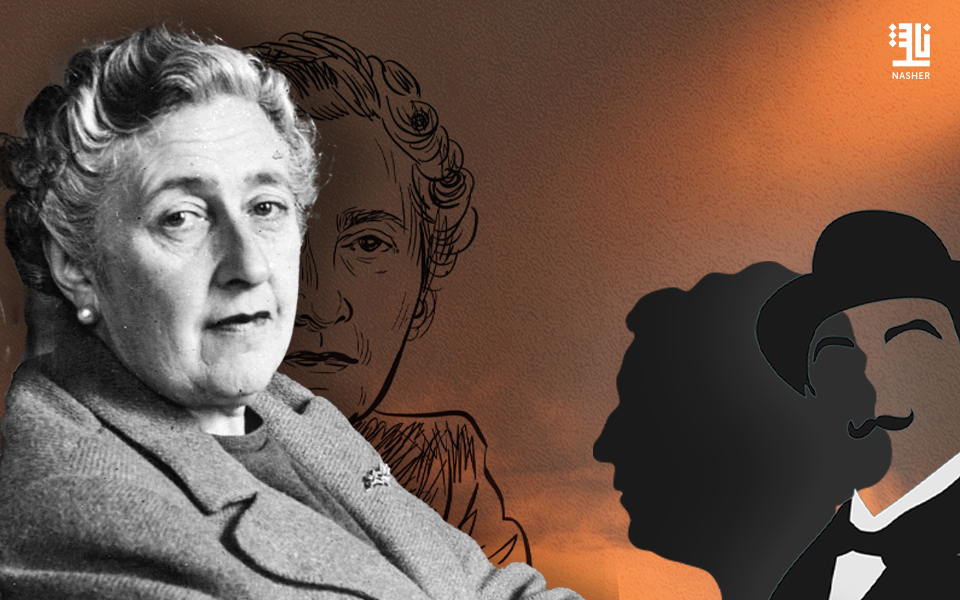
On September 15, the world marks the birthday of British novelist Agatha Christie (1890–1976), the unrivaled icon of crime fiction and the undisputed “Queen of Mystery” who reshaped the landscape of detective storytelling. More than a century after her birth, her name still dominates bestseller lists, and her novels continue to captivate successive generations of readers. In her ever-renewed presence lies proof that some literary voices transcend time and remain immune to the passing of years.
Christie was born in the seaside town of Torquay in southern England, a tranquil environment that nourished her early imagination. She began writing during the turbulent years of the First World War, and with the release of her debut novel The Mysterious Affair at Styles in 1920, a new signature appeared in crime literature: meticulously crafted plots, atmospheres steeped in suspense, and characters drawn with sly precision. From that very first work, the world began to discover the writer who would eventually become the best-selling author after Shakespeare.
She gave the world characters that became literary icons in their own right: the Belgian detective Hercule Poirot, with his razor-sharp reasoning, and the insightful Miss Marple, with her keen intuition. These figures grew into cultural symbols that transcended literature, finding new lives on stage, in cinema, and on television. It is often said that Poirot has become as synonymous with classic crime as Sherlock Holmes is with intellectual deduction.
Christie’s success, however, lay not only in spinning mysteries, but in turning suspense into a mirror of humanity itself. She used the detective tale as a lens to examine human motives and to portray societies under strain and crisis. With prose that balanced clarity of narration and structural precision, she made the reader an active participant in solving the puzzle, an approach that lent her works a unique interactive quality. Her novels did not remain confined to shelves; they became a global phenomenon, studied, adapted, and endlessly reread.
On her birthday, Agatha Christie emerges as more than a writer of detective fiction; she represents a school of thought in transforming popular literature into timeless art. She proved that novels born out of human curiosity and the fundamental questions of existence can travel from era to era and from language to language without losing their brilliance. Her legacy does not age, for it is built upon the eternal riddle of the human soul, with all its secrets, desires, and fears.