
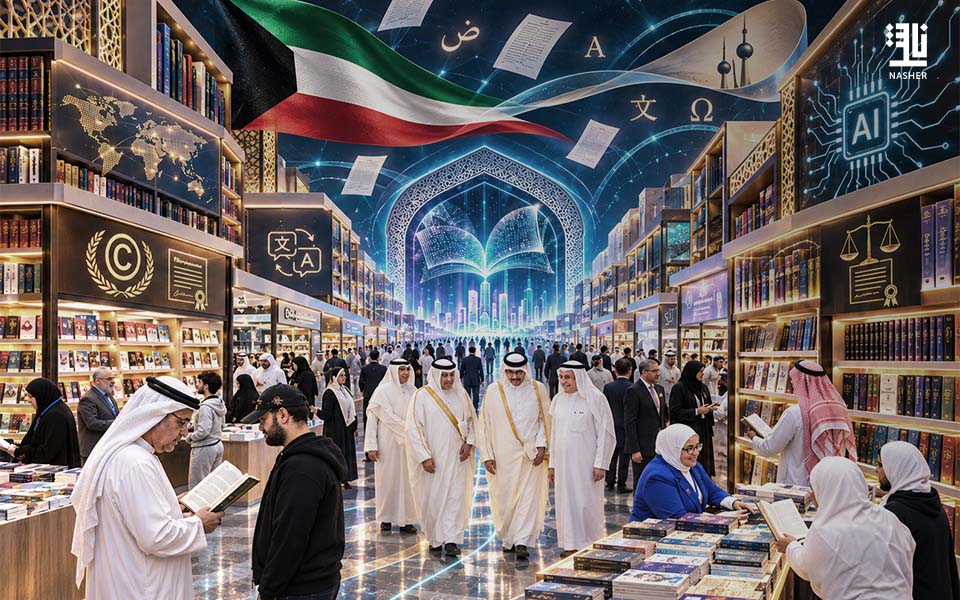
The 49th Kuwait International Book Fair is welcoming readers with a programme that celebrates the Gulf’s literary heritage while examining the changes shaping publishing. Organised by the National Council for Culture, Arts and Letters, the fair runs from 18 to 28 November 2026 at the Kuwait International Fairgrounds in Mishref, bringing together 592 participating organisations from 34 countries. Visitors can browse 248,094 titles, including 22,772 new releases published in 2026, with children’s books accounting for 42,205 titles.
Kuwait’s literary history has a prominent place in this year’s edition, which honours writer and poet Dr Khalifa Al-Wugayyan as its featured cultural figure, recognising his work in poetry, research and criticism, alongside his wider cultural contributions. Three exhibition halls also bear the names of poets Abdullah Al-Faraj and Moudhi Al-Obaidi, and historian Ahmad Al-Bishr Al-Roumi. These tributes introduce visitors, particularly younger readers, to figures whose writings helped document Kuwait’s history and shape its literary life.
Qatar, this year’s guest of honour, is presenting its intellectual and literary output in a pavilion inspired by traditional Qatari architecture, accompanied by discussions, poetry evenings and performances of Ardah and other folk arts. Its participation forms part of a broader Gulf presence that gives readers access to distinct literary experiences from across the region. Publishers and cultural figures from the UAE and neighbouring countries also have opportunities to exchange expertise and explore cooperation, building on Kuwait’s longstanding cultural ties with its Gulf neighbours.
More than 60 cultural events accompany the fair, ranging from discussions and poetry readings to workshops and meetings, alongside activities for children, young people and people with disabilities. The professional programme for Arab publishers addressed artificial intelligence and intellectual property, translation rights and digital translation, as well as financial management and opportunities for growth in publishing markets. These discussions connected the practical challenges facing publishing houses with the decisions needed to develop their businesses and bring their books to wider readerships.